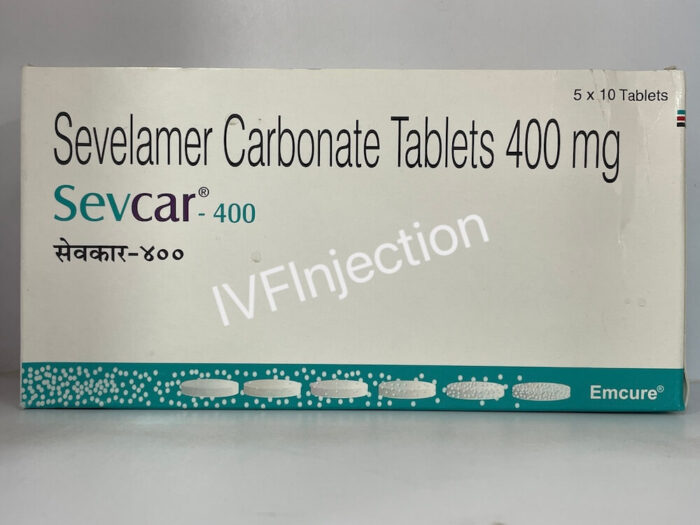
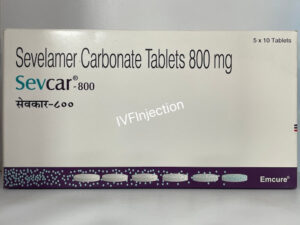
Sevcar 400 mg is a medicine used to control high phosphate levels in the blood in patients with chronic kidney disease, especially those on dialysis. High phosphate levels can lead to serious complications like weak bones, cardiovascular problems, and itching. Sevelamer the active ingredient in this medication works by binding phosphate in the gut, preventing it from being absorbed into the bloodstream.
How Sevcar 400 mg works?
Sevelamer is a non-calcium phosphate binder. It attaches to dietary phosphate in the intestines and eliminates it through stools. Unlike calcium-based binders, it does not increase calcium levels in the blood, which is important for patients with chronic kidney disease who may already be at risk of vascular calcification.
The tablet does not get absorbed into the bloodstream significantly, so its effect is mostly localized to the gut. This makes it safer for long-term use.
How to take Sevcar 400 mg
- Take Sevcar with meals to allow it to bind dietary phosphate effectively.
- Swallow tablets whole with water. Do not crush or chew.
Follow the dose and schedule prescribed by your doctor. Dosage depends on your blood phosphate levels, diet, and dialysis schedule.
Suggestion, side effects and other information
- Maintain regular phosphate monitoring with your nephrologist.
- Missed dose: If you miss a tablet, take it with your next meal. Do not double the dose.
Precautions
- Before starting Sevcar, tell your doctor if you have:
- Severe gastrointestinal obstruction
- Swallowing difficulty or motility disorders
- History of low calcium or high bicarbonate levels in blood
- Patients on other medications should take Sevcar at least 1 hour before or 3 hours after other oral medicines, as it can reduce absorption.
Side effects
Some patients may experience the following side effects:
- Nausea or vomiting
- Constipation or diarrhea
- Stomach discomfort or bloating
- Indigestion
Storage
- Store tablets in a cool, dry place below 30°C.
- Keep away from children and direct sunlight.
FAQ
Q. Can Sevcar 400 mg lower phosphate without dialysis?
Yes, it reduces phosphate absorption from diet, but its main use is in patients with chronic kidney disease on dialysis.
Q. Can it be taken with calcium-based supplements?
It is preferred over calcium-based binders in patients with risk of vascular calcification. Your doctor will advise on combination therapy.
Q. How soon will it reduce phosphate levels?
Some reduction may be seen within days, but regular monitoring is required for optimal dose adjustment.
Q. Is this medicine safe long term?
Yes, with regular monitoring of phosphate, calcium, and bicarbonate levels.